Since opening its doors just two years ago, the O+ Exchange Clinic has evolved in exciting and unexpected ways, facilitating over 1,100 exchanges, automating appointment systems and infrastructure, and relocating to a new multi-use space in Uptown Kingston.
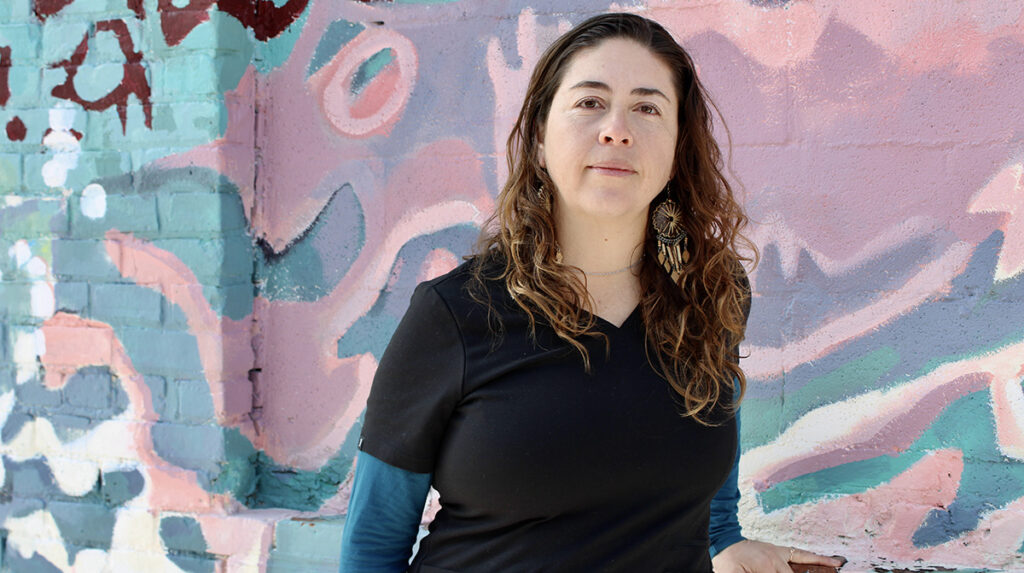
This spring, the O+ Exchange enters a new phase of growth under the leadership of Andrea Littleton, MD, who will oversee the clinic as O+’s new Medical Director.
A Kingston native, Dr. Littleton is double-board certified in family and addiction medicine and is also a street medicine provider. In addition to her work with O+, she serves as the Medical Director for Bronx Works and is the lead street medicine clinician for Care for the Homeless, two community organizations serving unhoused and low-income people and families. She is also an attending physician and Assistant Professor in Family Medicine at Montefiore Medical Center.
“Andrea’s commitment to caring for the entire community is unparalleled. From being a primary care physician to caring for the unhoused and marginalized through her work as a street medicine doctor, her work is as impactful as it is humbling,” says O+ co-founder Joe Concra. “We welcome her to O+ to not only care for our alumni, but to also help us envision how O+’s unique exchange can work for all.”
Andrea joined the team as the resident primary care provider last fall, but has been part of the O+ Festival since its early days, serving as a volunteer provider in the festival clinic since 2016.
“I started volunteering with O+ because it was very much in line with my mission of trying to get access to care for everyone,” she says. “Everybody has their skills and abilities to offer a community, and to be able to tap into that—certainly for artists—in exchange for healthcare is just such a wonderful idea.”
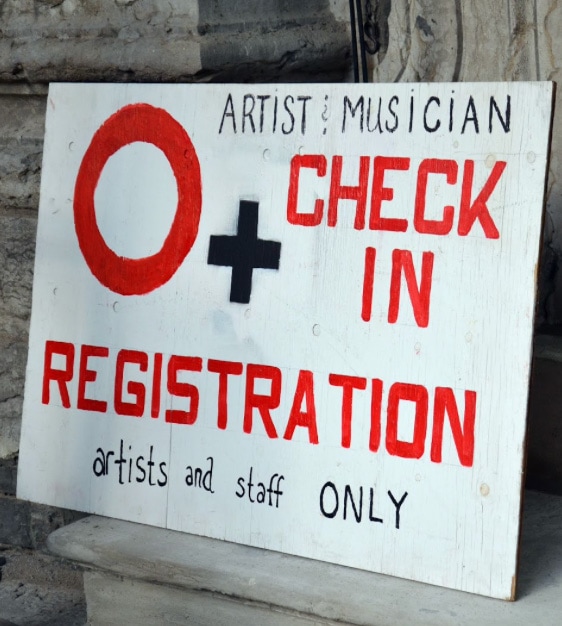
Each year during the festival, hundreds of artists and musicians flow through the Artist’s Clinic, a pop-up health and wellness space housed inside Bethany Hall at the Old Dutch Church. At the 2025 O+ Festival, 181 patients came through the clinic doors for a variety of services, including dental treatments, Reiki, massage, primary care, acupuncture, and more.
While the Artist’s Clinic is the heart of the three-day festival, opening the year-round Exchange Clinic has been a crucial part of O+’s mission and evolution.
“During the festival, we see a lot of people…but they also have ongoing healthcare needs throughout the year,” Andrea says. “The 365 clinic is a place to help address some of those continuing issues on a more regular basis. So I’m really excited to be able to continue the work that [former O+ Medical Director Dr. Dre Edge] had started.”
A look at Andrea’s career shows a deep commitment to service, though she says her path to becoming a doctor wasn’t always a straight line. “Growing up, I didn’t really know what it meant [to be a doctor] because I didn’t really have any doctors in my life,” she says. “But I had an inkling that maybe this was something I could do.”
She went to Cornell for pre-med and majored in biology with a concentration in nutrition, which she says sparked a lifelong interest in wellness and other lifestyle-focused disease prevention modalities. But by the time she graduated, she wasn’t quite sure that medical school was the right next step.
“I was kind of questioning medicine because it was very, very cutthroat at Cornell and very difficult,” she says. “There was not a lot of support for people of color to go into [medicine], especially as a female.”
She decided to take some time off from school and moved up to Buffalo to be closer to her brother, who was a student at the University of Buffalo at the time. Over the next few years, she researched nutrition and childhood obesity and also worked as a nursing assistant in a nursing home. She gradually realized that the best way for her to help people improve their wellness and quality of life was through medicine.
Andrea went to medical school at Stony Brook University and did her residency in family medicine at the Montefiore Residency Program in Social Medicine in the Bronx, a program that she says aligned closely with her personal mission and values. The training at Montefiore focused on a whole-person, whole-system approach to health and well-being, addressing cultural and socioeconomic barriers to health and gaps in the healthcare system that can affect access to preventive care and overall wellness.

Even if she didn’t grow up envisioning a future as a doctor, by the time she got to Montefiore, she knew she was exactly where she needed to be.
At Montefiore, Andrea says she also had the opportunity to work with unhoused communities in the Bronx. One of her attending physicians was also the medical director for the Bronx Team at Care For The Homeless (CFH), an organization that provides medical, dental, and mental health care to people and families experiencing homelessness throughout New York City, and advocates for policies to help end homelessness. In addition to providing healthcare services via clinics and mobile outreach, CFH partners with other agencies to provide shelter and supportive housing, legal services, job training, senior care, and more.
Andrea did a rotation with the CFH team during her third year of residency and loved the work—so much so that she later took over as medical director for the Bronx CFH team, leading the street medicine team, developing the medicine-assisted treatment (MAT) street team, and coordinating care at a drop-in shelter.
“I think it’s very powerful when you can really meet people physically where they’re at…when you can actually go to them in the community, [it] builds a whole other layer of trust for people who have been so disempowered and distrustful of the healthcare system in general,” she says.
Andrea had planned to stay settled in the Bronx—she met her husband when she was finishing medical school, and they were raising their three children in Mount Vernon while she continued to work at Montefiore. But she says she found herself at a pivot point, personally and professionally, after her mother passed away from breast cancer in 2013. She and her family moved to Kingston shortly after to set down new roots in her hometown.
“I never thought I would move back to Kingston, but at the time it all kind of made sense,” she says. “I loved where I grew up…and [again] I was doing something I never thought I would do, and it turned out to be a great decision for our family.”
Since returning to the Hudson Valley in 2014, Andrea has continued her work at Montefiore and CFH on a part-time basis. Until recently, she was also a family physician and addiction medicine specialist with Sun River Health in Beacon.
A lot has changed in the world since Andrea started practicing medicine over 20 years ago. She’s seen firsthand how shifting political priorities, inflating healthcare costs, the opioid epidemic, and the global Covid-19 pandemic have taken a toll on patients, providers, and public health infrastructure. Through it all, she says that witnessing her patients’ resilience and training the next generation of doctors drives her work.
“I become reinvigorated in my values just by talking to the patients that I work with and hearing their stories of adversity and how they’ve overcome them…[it] has really instilled in me inspiration for humankind,” she says. “And working with students and trainers and showing them ways that they can kind of give back in a very meaningful way…it really inspires them, and that inspires me.”
Further reflecting on her career, she says that working in direct outreach put into perspective how obstacles like housing insecurity, unstable income, and lack of reliable access to regular healthcare can make people unwell. Seeing the impact of these barriers in real-time informs the way she approaches patient care.
“I realized through all of that work that getting a good understanding of where the person’s coming from is the first step, and then I can see what ways I can work with that person to help them,” she says. “Typical Western medicine has always kind of put the doctor at the top of the decision-making tree, but we really are partners in care…Making sure [patients] feel their power and trust me to help them with their decisions is, I think, the most effective approach to helping people with their well-being.”
That ethos, combined with her background in both family medicine and street medicine, puts Andrea in a unique position to help envision the future of O+ Exchange Clinic and to provide ongoing care to the creative community of O+ alumni.
“Artists and musicians are certainly a sect of our population that has been neglected for healthcare,” she says. “I feel like they fall into that kind of [space] that we talk about, where you kind of make enough to kind of get by, but not enough to have good health insurance or even decent health insurance…so much of our population falls into that hole.”
While she notes that New York tends to offer better healthcare coverage than most states, too many still struggle to afford the care they need, and that those financial barriers—and political obstacles—have come into stark relief in the last few years.
“I feel like we are being tested now more than ever of our ability to find creative solutions to some of the barriers that our healthcare system hasn’t been able to provide,” she says.
The first year of operations at the O+ Exchange focused on testing and gathering feedback from the community. In 2025, those insights informed both the clinic offerings and the operational infrastructure needed to facilitate the exchange itself. Looking at 2026 and beyond, Andrea is focused on growth.
“I want to really be able to create a much larger network of [providers] with a similar mission to be able to exchange medicine for whatever services people can provide, and to empower our community to really feel like they have the ability to get good healthcare and wellness,” she says.
In the coming year, she says the team will explore grants and other funding sources that can help scale the types and volume of services available through the exchange, and potentially expand those services beyond festival alumni to serve the broader population in and around Kingston. She adds that a long-term goal would be to offer mobile outreach, similar to the work she’s done in the Bronx.
“My dream is really to be able to reach out to people who are unstably housed in the Kingston area and not only engage them for healthcare, but ultimately [to get them connected] for housing because that is such a big barrier to healthcare in general,” she says.
For now, she’s taking it one step at a time, leveraging the tools already in place and building upon the work the clinic team has accomplished over the last two years.
Andrea is partnering with nurse practitioner Dina Kravtsov—an O+ alumna and muralist who joined the team in 2025 to establish clinic operations in the new space—to offer primary care services onsite and coordinate referrals for services like dental care, dermatology, optometry, and teletherapy within O+’s provider network.
While these healthcare services help bridge a crucial gap in care for many uninsured and underinsured artists, Andrea sees the O+ Exchange as more than just a clinic. As it continues to scale, she feels it has the potential to become a hub that supports community wellness on a practical level, with resources and access to a broader network of providers and practitioners that may otherwise have been out of reach.
“We’re trying to tap into all of the strengths in the community to make sure that everyone can utilize their role in providing wellness,” she says. “I think that’s my vision of the clinic and what it can really offer the community.”